


Welcome to the Northern Kentucky Law Review
Explore our blogs, where our Editors thoughtfully dissect crucial legal topics that are actively shaping the contemporary legal landscape. From landmark court rulings and pivotal decisions to emerging trends and developing doctrines, our Editors provide insightful analysis and informed discussions to help ensure you remain well-informed, up-to-date, and meaningfully engaged.

Explore our latest blog articles below.
Find more insightful commentary on legal issues in the archives.

WHEN THE CLOCK RUNS OUT: THE NCAA’S New 5-FOR-5 RULE
Just weeks before the 2026–27 collegiate athletic season began, programs were finalizing rosters under an eligibility framework that remained under review by a federal appellate court. Known as the “5-for-5” rule, the new framework was formally adopted by the Division I Cabinet on June 23, 2026, replacing the traditional enrollment-based eligibility clock with an age-based model. Despite its goal of simplifying eligibility, the new rule has left courts with the power to decide when a student-athlete’s college career ends.
Photo by Memories on 35mm from Unsplash.
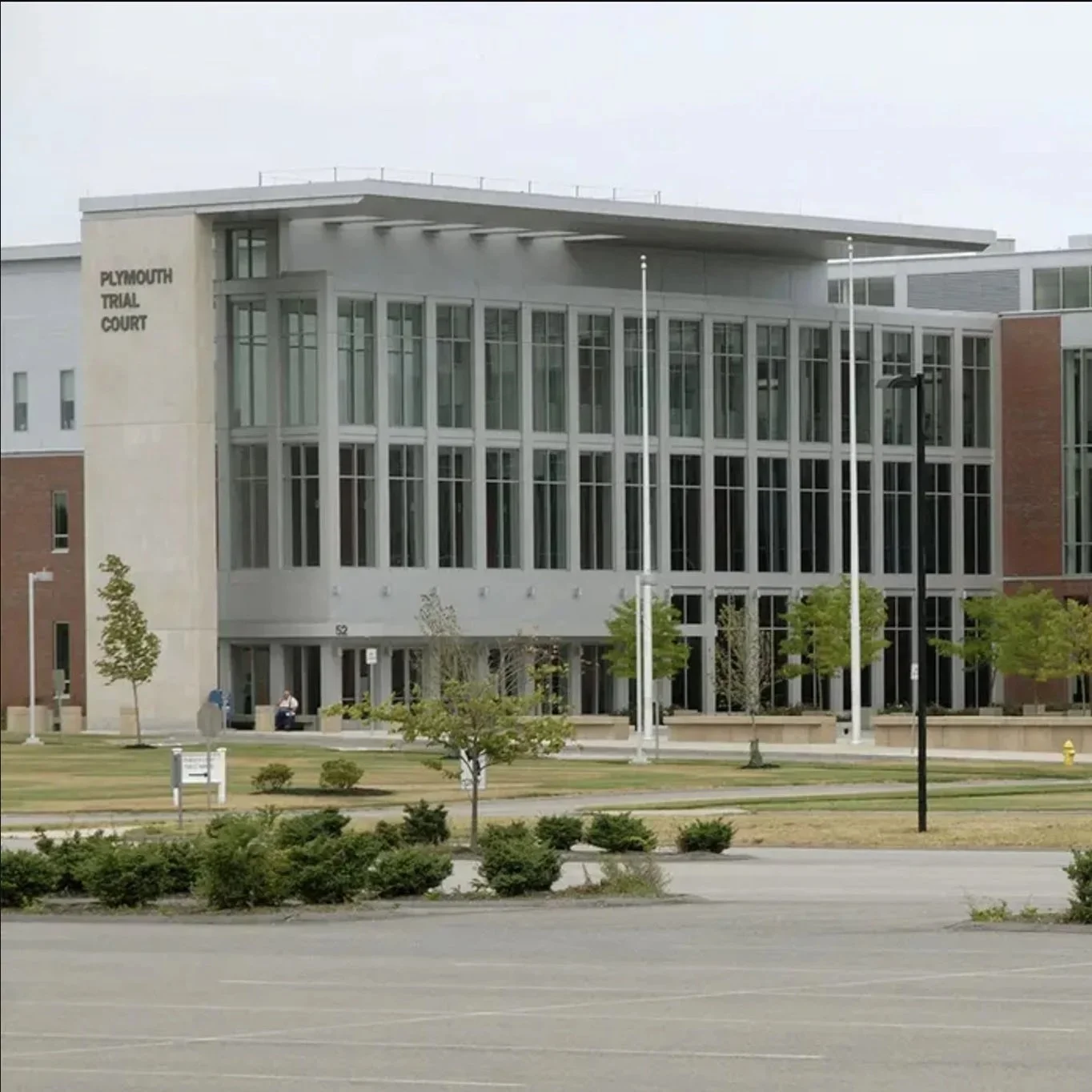
ELEVEN TO ONE: THE LINDSAY CLANCY AND THE CASE FOR A GRADED INSANITY DEFENSE
During deliberations, it was widely reported that eleven jurors were prepared to find Lindsay Clancy not guilty by lack of criminal responsibility, and one was not. Unable to come to a unanimous decision, the jury forced Judge William Sullivan to declare a mistrial. It may be natural to read of the split in the jury as the responsibility of a lone juror, but in Clancy’s case, the law simply left the twelve jurors without a workable option.
Photo from Mass.gov.
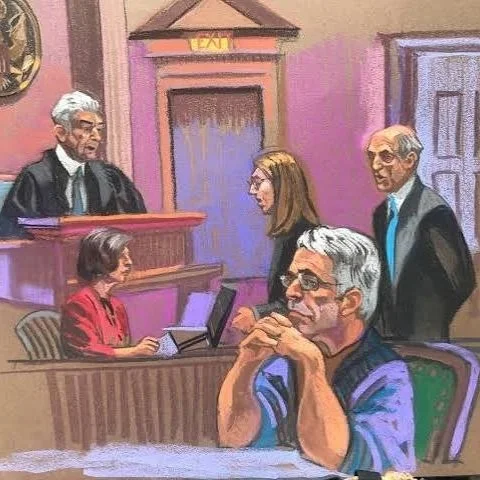
EMPOWERING SURVIVORS: HOW EPSTEIN’S CASE INSPIRED LEGAL CHANGE
The arrest of Jeffrey Epstein and the revelations that emerged from his trial have led to an obvious need for reform in key areas of the legal system. These changes would benefit victims and survivors of sexual abuse, who have historically been prevented from filing claims due to legal procedures such as the statute of limitations or varying child abuse laws in the states. One of Epstein’s most outspoken survivors, Virginia Giuffre, has specifically advocated for these changes that have previously prevented survivors from pursuing claims. Giuffre has significantly impacted the legal system by holding powerful men responsible for their actions and advocating for legal reform. By addressing these barriers, survivors are better positioned to hold their abusers accountable and encourage others to do the same.
Illustration by Christine Cornell.

WHEN TENURE ISN’T ENOUGH: ACADEMIC FREEDOM UNDER POLITICAL AND INSTITUTIONAL PRESSURE
Universities have long been understood as spaces for the exchange of ideas and the development of knowledge. To support this mission, the principle of academic freedom emerged as a cornerstone of higher education. One early catalyst was the controversy surrounding Stanford economics professor Edward A. Ross, whose dismissal in 1900 following politically controversial remarks sparked national debate and helped inspire the formation of the American Association for University Professors (AAUP) in 1915. Since then, tenure has functioned as a key safeguard for academic freedom, insulating faculty from retaliation for ideas expressed in their speech, research, or teaching.
Today, however, that protection appears increasingly uncertain. Recent controversies and legislative developments suggest that tenure may no longer provide the level of security that it once did.
Photo by Vitaly Gariev on Unsplash.

WE’RE NOT IN KANSAS (CITY, MISSOURI) ANYMORE: ANTITRUST AND INTERSTATE COMPETITION IMPLICATIONS IN THE CHIEFS’ STADIUM RELOCATION FROM MISSOURI TO KANSAS
Despite Arrowhead’s deep-rooted history and legacy, the Chiefs have recently announced their decision to begin constructing a new $3 billion domed stadium, which is to be located only about 20 miles west across state borders in Wyandotte County, Kansas. Although devoted fans mourn the move from Arrowhead, Chiefs ownership team has indicated that Kansas’s offer, covering 60% of stadium costs through state bonds, centralizing negotiations within a single entity, and having to pay no property taxes, provided a more attractive and streamlined financing structure than what was offered from Missouri to make renovations to the existing stadium. Although the arrangement may benefit Chiefs ownership, opponents warn that escalating interstate competition risks increasing taxpayer obligations and fueling future cross-border economic conflicts. The proposed relocation of the Kansas City Chiefs’ stadium from Missouri to Kansas highlights the legal and economic implications of interstate subsidy competition, raising important questions about antitrust law, state action immunity, and the broader fiscal and economic consequences for the Kansas City metropolitan region and its residents.
Photo by Mick Haupt on Unsplash.

KENTUCKY’S NEW “SYNTHETIC MEDIA” ELECTION LAW: A DISCLOSURE FIX OR A FIRST AMENDMENT FIGHT?
AI video generation has drastically improved in recent years. Released in September 2025, an OpenAI program called Sora 2 has been praised for its realism and quality in its video generation. Because of programs like this that can produce videos and images with convincing realism, Kentucky sought to regulate their use in electioneering communications.
Photo by Nathan Kuczmarski on Unsplash.

MAKING YOU AN OFFER YOU CAN'T REFUSE: OPPORTUNISTIC BLACKMAIL IN ARTIFICIAL INTELLIGENCE
Currently, 95% of adults in the United States have stated that they have heard about artificial intelligence. Although almost all American adults know of artificial intelligence, there is still much not known about the potential ramifications with this developing technology. One of the newest ramifications of AI is that systems have begun opportunistically blackmailing users.
Photo by Immo Wegmann on Unsplash.

MENTAL HEALTH AS AN INJURY: RETHINKING INSTITUTIONAL LIABILITY IN COLLEGE ATHLETICS
Suicide has been reported as the second leading cause of death among young adults. For collegiate athletes specifically, suicide rates doubled between 2002 and 2022. Despite growing mental health concerns, most Division I athletic departments still lack adequate mechanisms to address the needs of student-athletes. Although the NCAA has taken steps to prioritize student-athlete well-being, gaps remain between existing initiatives and reported needs.
Photo by Josh Olalde on Unsplash.

