


Welcome to the Northern Kentucky Law Review
Explore our blogs, where our Editors thoughtfully dissect crucial legal topics that are actively shaping the contemporary legal landscape. From landmark court rulings and pivotal decisions to emerging trends and developing doctrines, our Editors provide insightful analysis and informed discussions to help ensure you remain well-informed, up-to-date, and meaningfully engaged.

Explore our latest blog articles below.
Find more insightful commentary on legal issues in the archives.

WHEN TENURE ISN’T ENOUGH: ACADEMIC FREEDOM UNDER POLITICAL AND INSTITUTIONAL PRESSURE
Universities have long been understood as spaces for the exchange of ideas and the development of knowledge. To support this mission, the principle of academic freedom emerged as a cornerstone of higher education. One early catalyst was the controversy surrounding Stanford economics professor Edward A. Ross, whose dismissal in 1900 following politically controversial remarks sparked national debate and helped inspire the formation of the American Association for University Professors (AAUP) in 1915. Since then, tenure has functioned as a key safeguard for academic freedom, insulating faculty from retaliation for ideas expressed in their speech, research, or teaching.
Today, however, that protection appears increasingly uncertain. Recent controversies and legislative developments suggest that tenure may no longer provide the level of security that it once did.
Photo by Vitaly Gariev on Unsplash.
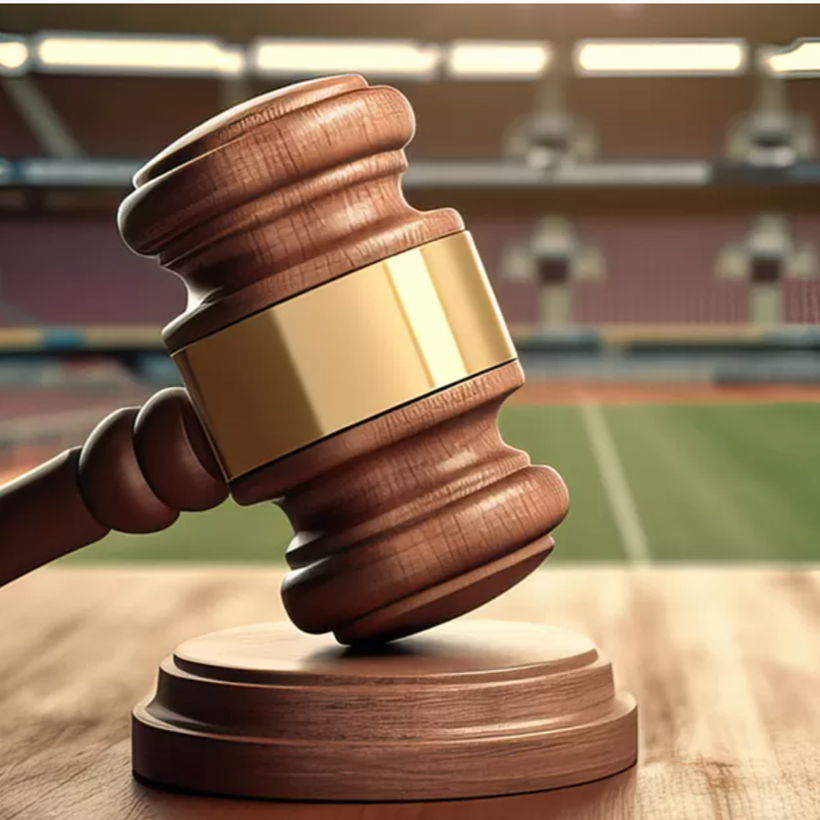
THE RECUSAL DILEMMA: BALANCING IMPARTIALITY AND PRACTICALITY IN MODERN COURTS
Recently, there have been two interesting cases of judicial recusals, both related to college athletics. First, Duke University sued its former quarterback, Darian Mensah, to prevent him from entering the transfer portal, after Mensah had previously agreed to return to Duke. The judge in the case, Durham County Superior Court Judge Michael O’Foghludha, denied Duke’s request for a temporary restraining order, then recused himself. O’Foghludha is a Duke basketball season-ticket holder, and thus a booster according to NCAA rules. The second case concerned Charles Bediako, a former University of Alabama basketball player who is seeking to return to the team after having been an NBA draft pick. The judge in Bediako’s case voluntarily recused himself, after a motion for recusal was submitted by the NCAA. Tuscaloosa Circuit Court Judge James Roberts is listed as a donor on the Crimson Tide Foundation’s website. His replacement, Judge Daniel Pruet, is another Alabama graduate. Pruet is also overseeing the murder case of former Alabama basketball player Darius Miles. These situations raise questions about the nature of judicial recusal, and how much of a conflict of interest is necessary for recusal to occur. This post will suggest that the practical considerations surrounding recusal generally outweigh any actual impartiality that is present.

